
Introduction
Marketing is essential for every business to reach its target audience and grow. Over time, marketing strategies have evolved from traditional methods like print and television to modern digital platforms. Understanding the difference between digital marketing and traditional marketing helps businesses choose the right approach for success.
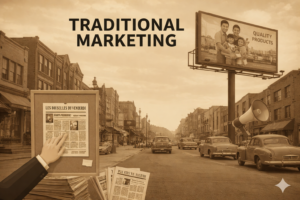
What is Traditional Marketing?
Types of Traditional Marketing
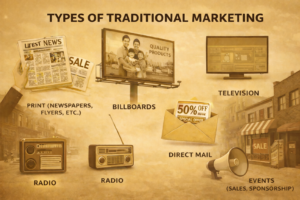
1. Print Marketing
This includes advertisements in newspapers, magazines, brochures, flyers, and posters. It is one of the oldest and most trusted forms of marketing.
2. Broadcast Marketing
Broadcast marketing uses television and radio to reach a large audience. TV commercials and radio ads are powerful tools for brand awareness.
3. Outdoor Marketing
Outdoor marketing includes billboards, banners, hoardings, and transit ads (bus, train, taxi branding). These are highly visible and target local audiences.
4. Direct Mail Marketing
This method involves sending postcards, catalogs, and promotional letters directly to customers’ homes or offices.
5. Telemarketing
Telemarketing is the practice of calling potential customers to promote products or services.
Key Features of Traditional Marketing
- Offline Channels: Does not rely on the internet
- Mass Audience Reach: Targets a broad group of people
- One-Way Communication: Limited interaction with customers
- High Cost: Advertising through TV or print can be expensive
- Limited Tracking: Difficult to measure exact performance
Advantages of Traditional Marketing
- Strong Brand Recognition: TV and print ads build trust and credibility
- Wide Reach: Ideal for targeting large audiences
- Effective for Local Marketing: Great for promoting local businesses
- Tangible Materials: Physical ads like flyers and brochures are memorable
Disadvantages of Traditional Marketing
- Expensive: High costs for production and placement
- No Precise Targeting: Cannot easily target specific audiences
- Difficult to Measure Results: No real-time analytics
- Less Engagement: No direct interaction with customers
Examples of Traditional Marketing
- A TV commercial promoting a new product
- A full-page ad in a newspaper
- A billboard on a busy highway
- A flyer distributed in a local area
- A radio advertisement during peak hours
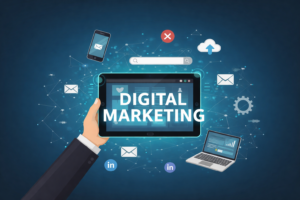
What is Digital Marketing?
Types of Digital Marketing
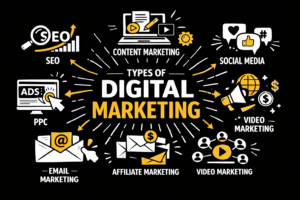
1. Search Engine Optimization (SEO)
The practice of improving a website to rank better on search engines like Google is known as SEO. It boosts your website’s organic (free) traffic.
2. Pay-Per-Click (PPC) and Search Engine Marketing (SEM)
This involves paid advertising on search engines. Businesses pay when users click on their ads (e.g., Google Ads).
3. Social Media Marketing (SMM)
Promoting products through platforms like Facebook, Instagram, LinkedIn, and Twitter to engage with audiences and build brand awareness.
4. Content Marketing
Creating and sharing valuable content such as blogs, videos, and infographics to attract and retain customers.
5. Email Marketing
Sending targeted emails to customers to promote products, share updates, and build relationships.
6. Affiliate Marketing
Partnering with individuals or websites to promote products and earning a commission for each sale generated.
7. Influencer Marketing
Collaborating with social media influencers to promote products to their audience.
8. Mobile Marketing
utilizing mobile-friendly websites, SMS, and apps to reach users on mobile devices.
Key Features of Digital Marketing
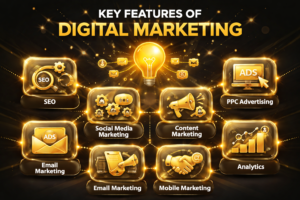
- Online-Based: Operates through internet platforms
- Targeted Audience: Allows precise audience targeting
- Two-Way Communication: Direct interaction with customers
- Cost-Effective: Suitable for small and large businesses
- Measurable Results: Real-time tracking and analytics
Advantages of Digital Marketing
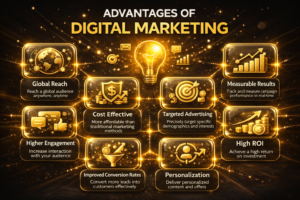
- Global Reach: Connect with audiences worldwide
- Cost-Effective: Lower cost compared to traditional marketing
- Advanced Targeting: Reach specific demographics and interests
- Real-Time Analytics: Track performance instantly
- Higher Engagement: Interact directly with customers
- Flexibility: Easily modify campaigns anytime
Disadvantages of Digital Marketing
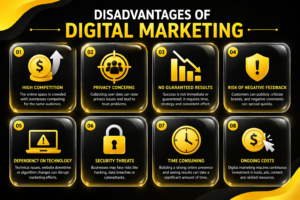
- High Competition: Many businesses competing online
- Requires Skills: Needs knowledge of tools and strategies
- Dependence on Technology: Internet issues can affect campaigns
- Privacy Concerns: Data protection and security challenges
Examples of Digital Marketing
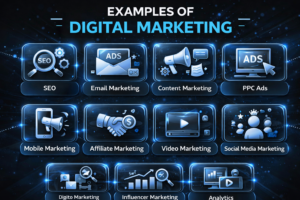
- A business running ads on Google
- A brand promoting products on Instagram
- A company sending promotional emails
- A blog optimized for search engines
- A YouTube video marketing a product
Which is superior: traditional marketing or digital marketing?
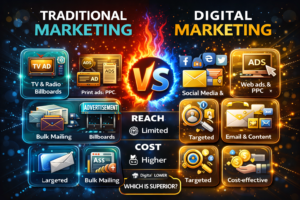
The goal of choosing between digital and traditional marketing is not to determine which is “better” in general. Your company’s objectives, target market, financial constraints, and marketing plan will determine the best option. However, in today’s fast-changing world, digital marketing often has a strong advantage—but traditional marketing still holds value in certain situations. This balance is at the core of Digital Marketing vs Traditional Marketing, where businesses must evaluate both approaches to decide what fits their goals best.
When Digital Marketing is Better
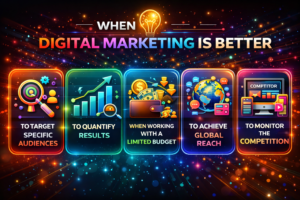
For companies looking for focused, economical, and quantifiable outcomes, digital marketing is the ideal option.
Key Reasons
- Precise Targeting: You can reach specific audiences based on age, location, interests, and behavior
- Lower Cost: Ideal for startups and small businesses with limited budgets
- Real-Time Results: Track performance instantly using analytics tools
- Global Reach: Promote your business worldwide
- High Engagement: Interact directly with customers through comments, messages, and feedback
Best For
- Online businesses and e-commerce
- Startups and small businesses
- Brands targeting younger, tech-savvy audiences
- Performance-based campaigns (leads, sales, conversions)
When Traditional Marketing is Better
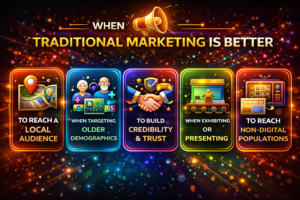
Traditional marketing is effective when businesses want mass exposure and strong brand credibility.
Key Reasons
- Wide Reach: TV, radio, and newspapers reach a large audience quickly
- High Trust: People often trust print and TV ads more
- Local Impact: Ideal for targeting specific geographic areas
- Tangible Presence: Physical materials like flyers and brochures leave a lasting impression
Best For
- Local businesses (shops, restaurants, real estate)
- Targeting older audiences
- Brand awareness campaigns
- Large companies with bigger budgets
The Real Answer: A Combination is Best
In most cases, the most effective strategy is integrated marketing, combining both digital and traditional methods.
Example Strategy
- Use traditional marketing (TV, billboards) for brand awareness
- Use digital marketing (social media, SEO, ads) for engagement and conversions
This combination helps businesses maximize reach while maintaining cost efficiency and performance tracking.
Final Verdict
- If you want fast growth, measurable results, and cost efficiency → Digital Marketing is better
- If you want strong brand visibility and local trust → Traditional Marketing is better
- If you want maximum results → Use both together
Advantages of Digital Marketing

1. Global Reach
2. Cost-Effective
3. Targeted Audience
4. Measurable Results
5. Better Customer Engagement
6. High Conversion Rates
7. Flexibility and Easy Optimization
8. Brand Building
9. Multiple Marketing Channels
10. Personalization
11. Higher ROI (Return on Investment)
12. Mobile Accessibility
Conclusion
In conclusion, both traditional marketing and digital marketing play important roles in helping businesses reach their audience and achieve growth. Traditional marketing, through channels like print, television, and outdoor advertising, continues to be effective for building strong brand recognition, especially among local and mass audiences. It offers credibility and a tangible presence that many consumers still trust. On the other hand, digital marketing has transformed the way businesses connect with customers by offering precise targeting, real-time interaction, measurable results, and global reach through platforms like Google and social media networks such as Facebook and Instagram.
In today’s fast-paced digital world, digital marketing often provides a competitive advantage due to its cost-effectiveness, flexibility, and ability to generate higher engagement and conversions. However, traditional marketing still holds value in specific scenarios, particularly for local outreach and brand awareness campaigns. The most effective approach is not choosing one over the other, but integrating both strategies to maximize reach and impact. By combining the trust and visibility of traditional marketing with the precision and performance of digital marketing, businesses can create a balanced and powerful marketing strategy that ensures long-term success.
Athoer:Faseeh